
7 Mistakes You're Making with Stainless Steel Rust Removal (and How to Fix Them)
![[HERO] 7 Mistakes You're Making with Stainless Steel Rust Removal (and How to Fix Them)](https://cdn.marblism.com/zUgUzaHm9xa.webp)
You take pride in your boat. You've invested time and money into keeping it looking sharp. But those rust stains on your stainless steel railings, cleats, and fittings? They're driving you crazy.
Here's the thing: most boat owners are unknowingly making their rust problems worse. The good news? Once you know what NOT to do, fixing rust becomes surprisingly easy. Let's dive into the seven most common mistakes, and how to avoid them so you can spend less time scrubbing and more time on the water.
Mistake #1: Reaching for the Bleach
We get it. Bleach seems like it should work on everything, right? Wrong.
The Problem: Bleach and other chlorine-based cleaners actually accelerate corrosion on stainless steel. They break down the protective chromium oxide layer that prevents rust in the first place. What looks like a quick cleaning solution today becomes a bigger rust problem tomorrow.
The Fix: Skip the bleach entirely. Instead, look for cleaners specifically formulated for marine stainless steel. A quality stainless steel cleaner for rust will remove oxidation without damaging the protective layer your metal needs to stay rust-free.
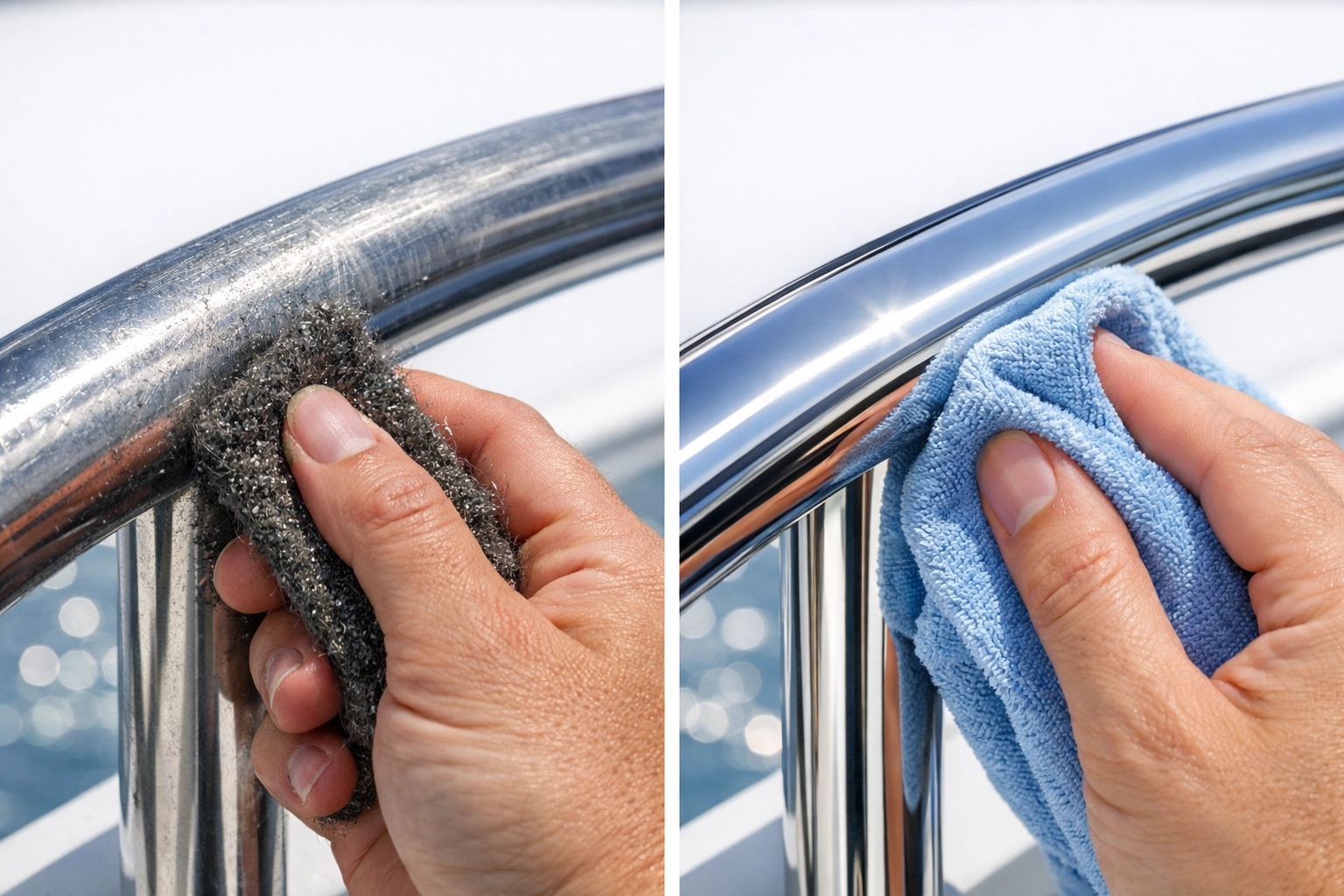
Mistake #2: Going to Town with Steel Wool
Nothing says "I'm serious about cleaning" like grabbing steel wool or a wire brush, right? Unfortunately, your stainless steel disagrees.
The Problem: Abrasive scrubbers create microscopic scratches in your stainless steel surface. These tiny grooves trap moisture and salt, creating perfect little homes for rust to develop. Even worse, steel wool can leave behind iron particles that rust themselves and spread discoloration.
The Fix: Put down the steel wool. Use a soft microfiber cloth or a non-abrasive sponge instead. Better yet, find a rust remover that doesn't require scrubbing at all. (More on that in a minute.)
Mistake #3: Scrubbing Against the Grain
Ever notice those faint lines running along your stainless steel? That's the grain, and it matters more than you think.
The Problem: When you clean perpendicular to the grain, you're pushing dirt, salt, and grime deeper into those microscopic grooves. This creates stubborn buildup that's harder to remove and provides more surface area for rust to take hold.
The Fix: Take a closer look at your stainless steel. Identify which direction the grain runs, then always wipe parallel to those lines. It's a simple change that makes a big difference in how effectively you remove contaminants.
Mistake #4: Letting It Air Dry
You've just spent time cleaning your railings. They're dripping with rinse water. You head inside for a cold drink and let nature take its course, right?
The Problem: That tap water you rinsed with? It's full of minerals. When water evaporates, those minerals stay behind as white spots and deposits. These spots aren't just ugly, they create an uneven surface where rust can start forming.
The Fix: Always dry your stainless steel immediately after rinsing. Use a clean, dry microfiber cloth to wipe down every surface. If you have hard water at your marina, consider using distilled water for the final rinse.

Mistake #5: Ignoring Ingredient Labels
Most boat owners don't read the fine print on their cleaning products. That's a problem when certain chemicals are doing more harm than good.
The Problem: Cleaners containing ammonia, quaternary salts, fluorine, or iodine can cause pitting and permanent discoloration on stainless steel. These ingredients might work wonders on your kitchen counters, but they're too aggressive for marine-grade metals.
The Fix: Flip that bottle around and check the ingredient list. Look for marine-specific formulas that explicitly state they're safe for stainless steel. When in doubt, ask at your local marine supply store, or better yet, stick with products designed specifically for boats.
Mistake #6: The "Spray and Forget" Approach
Here's a common scenario: you spray some cleaner, let it sit, rinse it off, and call it a day. Seems efficient, but it's actually creating problems.
The Problem: If you don't rinse thoroughly, chemical residues remain on the surface. These residues can react with salt water and air, creating new rust spots faster than you can say "maintenance weekend." Plus, inadequate rinsing leaves behind the very contaminants you were trying to remove.
The Fix: Be thorough with your rinse. Use plenty of fresh water and make sure you've removed every trace of cleaner. Then, remember mistake #4?, dry it completely.
Mistake #7: Tool Contamination
This one's sneaky. You wouldn't think the tools you use to maintain other parts of your boat could cause rust on your stainless steel.
The Problem: When you use the same tools, brushes, or cloths on regular steel and then on stainless steel, you transfer iron particles. These particles rust when exposed to moisture, creating those annoying orange stains that seem to appear out of nowhere.
The Fix: Keep separate cleaning supplies for your stainless steel. Dedicate specific cloths and brushes to stainless-only duty. Store them separately from tools you use on other metals.
The Better Way: Work Smarter, Not Harder
You bought a boat to enjoy being on the water, not to spend weekends hunched over corroded railings with a scrub brush. That's where the right product makes all the difference.
Spotless Stainless Rust Remover and Protectant changes the game entirely. This isn't your typical stainless steel cleaner for rust, it's a professional-grade formula trusted by NASA for maintaining the Kennedy Space Center. Yes, that NASA.

Here's what makes it different: you don't scrub. You simply brush it on, wait while it does the work, and rinse. No elbow grease required. The formula removes rust, tea staining, and oxidation while simultaneously protecting the surface from future corrosion.
Think about that. Instead of spending your Saturday fighting with rust stains, you could be cruising to your favorite anchorage. The product does the heavy lifting while you do literally anything else.
Prevention is Your Secret Weapon
Once you've removed rust properly, keeping it away is actually pretty simple:
- Rinse your stainless steel with fresh water after every salt water exposure
- Dry surfaces thoroughly (yes, we're repeating this because it matters)
- Apply a protective coating periodically: Spotless Stainless leaves behind a protective barrier with every use
- Inspect regularly for early signs of rust so you can address them before they spread
The Bottom Line
Every mistake on this list comes from the same place: trying to use household cleaning methods on marine-grade equipment. Your boat operates in one of the harshest environments imaginable: constant salt exposure, UV rays, moisture, and temperature swings. It deserves products designed for those challenges.
The seven mistakes we've covered are easy to make but just as easy to avoid once you know better. Ditch the bleach, steel wool, and aggressive chemicals. Stop fighting with stubborn rust stains when you could be enjoying your boat instead.
Ready to see the difference the right product makes? Check out Spotless Stainless and discover why boat owners and NASA trust it for rust-free results: no scrubbing required.
Your stainless steel will thank you. And more importantly, you'll get back to doing what you actually love: being out on the water.